AZ Logo Skip To Content
  • Tumor Types & BiomarkersTumor Types & Biomarkers

    Tumor Types & Biomarkers

    Explore clinical guidelines on why, whom and how to test actionable biomarkers in lung, breast, ovarian and prostate cancers.

    • Lung Tumor
      • EGFR
      • ERBB2 (HER2)
    • Breast Tumor
      • BRCA1/2
      • ESR1
      • HER2
      • PIK3CA/AKT1/PTEN
    • Ovarian Tumor
      • HRD
    • Prostate Tumor
      • HRRm
      • PTEN
  • Testing Solutions
  • Explore Precision MedicineTumor Types & Biomarkers

    Explore Precision Medicine

    Implement best practices in your workflow and discover how recent advances are optimizing precision medicine.

    Realizing the Potential of Precision Medicine

    Collaborate across the MDT to address health inequities and optimize testing pathways.

    Realizing the Potential of Precision Medicine

    Latest Developments in Precision Medicine

    Explore recent advances in diagnostic technologies and novel biomarkers to support precision medicine in your practice.

    Latest Developments in Precision Medicine
  • ResourcesTumor Types & Biomarkers

    Resources

    Access a range of resources you can apply in your practice.

    FAQs

    Find answers to frequently asked questions about precision medicine.

    FAQs

    Find a Testing Lab

    Search our directory of major laboratories that perform diagnostic biomarker testing.

    Find a Testing Lab

    Glossary

    Find definitions for the most commonly used terms in precision medicine.

    Glossary

    Resource Library

    Explore our library of videos and downloadable tools to help optimize your practice and inform your patients.

    Resource Library

    My Favorites

    Personalize your learning by creating a bespoke collection of precision medicine resources.

    My Favorites
  • Our Team
Subscribe Connect with us
Open MenuClose Menu

Search

  • Home Icon
  • Realizing the Potential of Precision Medicine

  • Realizing the Potential of Precision Medicine

bolt

Personalize your browsing experience today.

What are you looking for today?

checking the code

Biomarker on DNA

Realizing the Potential of Precision Medicine

Collaborate across the MDT to address health inequity in biomarker testing and precision medicine.

Reading time:18 min
 
Jump to:
  • Transforming Care
  • Removing Barriers
  • Enhance Your Approach
  • Considerations for Your Practice
  • Helpful Resources

Precision Medicine is Changing the Way Cancer is Diagnosed and Treated1‑3

Precision Medicine is advancing cancer diagnostics and optimizing treatment through a tailored approach to each patient’s genetic and molecular cancer profile.1–3

Dividing cells icon

In a study of more than 9,000 tumors from 33 cancer types,

57%

harbored potentially actionable oncogenic driver events.4

Since actionable biomarkers have been discovered in many common tumors, biomarker testing is vital for early cancer detection and determining eligibility for targeted treatment.1

Guidelines icon

What the Guidelines Say

American Society of Clinical Oncology (ASCO), College of American Pathologists (CAP), and NCCN Clinical Practice Guidelines in Oncology (NCCN Guidelines® ) all recommend the use of tumor biomarker testing to establish eligibility for targeted treatment and clinical trials.5–12

ASCO, American Society of Clinical Oncology; CAP, College of American Pathologists; NCCN, National Comprehensive Cancer Network.

Targeted therapies are improving outcomes across cancer types13–18

Meta-analyses and retrospective studies discovered improved response rates, progression-free and overall survival for patients treated with precision therapies than those who are not.13–18

Two arrows: one for targeted therapy and one for standard therapy. The targeted therapy arrow shows a 53% lower risk of progression compared to standard therapy.

Targeted
therapy

Standard
therapies

RISK OF PROGRESSION

Two arrows: one for targeted therapy and one for standard therapy. The targeted therapy arrow shows a 53% lower risk of progression compared to standard therapy.

Targeted
therapy

Standard
therapies

RISK OF PROGRESSION

Two arrows: one for targeted therapy and one for standard therapy. The targeted therapy arrow shows a 53% lower risk of progression compared to standard therapy.

RISK OF PROGRESSION

Standard
therapies

Targeted
therapy

Targeted therapy contributed to

53%

less risk of progression vs. standard therapy17,a

aAfter adjusting for other factors in a pan-tumor study of actionable mutations.17

 Target icon

Cancer targeted therapies have notably improved outcomes. Equitable access to and use of biomarker testing is crucial to ensure that patients don’t miss out on the potential benefits of precision medicine and targeted therapies.17

Removing Barriers so More Patients Can Benefit From Precision Medicine

Social determinants of health may impact access to biomarker testing and leave the promise of precision medicine unrealized for many.19–21

 Lung icon

Despite a history of targeted treatment availability in non-small cell lung cancer (NSCLC),19

64%

of over 500,000 people with NSCLC in the US did not receive a personalized treatment.19

While biomarker testing was not completed for patients (%) with22:

  • breast infographic showing 39% on a pie chart style graphic

    Metastatic HER2-positive breast cancer

    39%

  • ovarian infographic showing 15% on a pie chart style graphic

    Advanced ovarian cancer

    15%

  • prostate infographic showing 40% on a pie chart style graphic

    Metastatic prostate cancer

    40%

DNA helix icon

With biomarker testing informing targeted treatment, this example highlights the need for optimized testing protocols and reporting to minimize disparities in cancer treatment.19

HER2, human epidermal growth factor 2; NSCLC, non-small cell lung cancer.

MDTs Can Boost Patient Health Literacy for Improved Understanding of Biomarker Testing

Infographic about communication between healthcare providers and their patients about biomarker testing

75%

48%

of patients remembered having a biomarker testing conversation with their multidisciplinary team (MDT)

of patients still struggled with biomarker testing terms23

Infographic about communication between healthcare providers and their patients about biomarker testing

75%

of patients remembered having a biomarker testing conversation with their multidisciplinary team (MDT)

48%

of patients still struggled with biomarker testing terms23

By putting communication strategies and formal support systems in place, and improving shared decision-making on treatment options, MDTs can help reduce disparities in cancer-related outcomes while helping patients and caregivers better understand the concept and implications of biomarker testing.23

Disparities in oncology trials limit precision medicine access, affecting specific subgroups more20,21

Limited knowledge of underlying cancer biology in racial and ethnic minority groups highlights the urgent need for MDTs to advocate for and prioritize enrollment of these groups (proportionate to their cancer incidence) in future clinical studies. The resulting discoveries can then be used to personalize treatments for underrepresented racial and ethnic groups in cancer with greater confidence.20,24

MDT, multidisciplinary team.

Socioeconomic disparities can affect biomarker testing and precision medicine outcomes21

A systematic review and meta-analysis found that persons with low socioeconomic status were21:

 Infographic stating that persons with low socioeconomic status were 17% less likely to be treated with precision therapies

17%

less likely to be treated with precision therapies

 Infographic stating that persons with low socioeconomic status were 17% less likely to be treated with precision therapies

17%

less likely to be treated with precision therapies

Further, the intersection of social determinants of health with environmental, and genomic and/or biologic factors and how they influence disease outcomes is not well understood, and highlights the need to capture more data in future precision medicine studies to evaluate the level of impact on health outcomes.20

MDT collaboration can help improve equitable access to precision medicine20

Standardized testing and reporting protocols to identify and treat all patients eligible for targeted therapies

Improved education on biomarker testing, genetic studies, and genetic counseling in patients living with cancer

Strengthening formal support systems, verbal communication strategies, and MDT coordination to address health literacy barriers on biomarker testing for patients with cancer

Continued implementation of strategies to target economic barriers to testing and treatment

Increased advocacy for diversifying patient recruitment to clinical studies

MDT, multidisciplinary team.

Enhance your MDT’s approach to biomarker testing to help improve patient outcomes20

 Coordinator icon

Implement reflexive testing

Shorten the time to obtain molecular test results, minimize tissue insufficiencies, and increase your lab’s testing capacity.25 Reflexive testing may decrease average biomarker testing turnaround time by over 2 weeks.25–29

Pathologists generally drive reflexive testing protocols, for example, by sharing test results directly with genetic counselors to minimize the potential of missed patients.27

Coordinator icon

Connect patients with a genetic counselor:

They are uniquely equipped to help MDTs identify people who may have a hereditary cause for their cancer. Promote greater access to genetic counseling services by30:

  • Educating non-genetic healthcare providers
  • Triaging patients according to expected complexity
  • Offering telehealth services
 Guidelines icon

Use consistent terminology:

Synoptic reporting and standard terminology allow for clearer communication of test results to the broader MDT, avoiding misunderstandings.31

Refer to our Glossary of common terms in precision medicine:

View Glossary
People with a chat box behind icon

Form a molecular tumor board:

This multidisciplinary panel convenes regularly to discuss important results during care. This can aid the interpretation of complex genomic data and improve a patient’s access to targeted therapies.32,33 One study found over half of board-reviewed biomarker testing results led to a change in a patient’s treatment plan.34

Find practical tips on forming a molecular tumor board along with discussions about common challenges and potential solutions.

Assign a patient navigator
Scalpel icon

Designate a team member to coordinate care:

Patient navigators play a crucial role in providing patients with education, support, and bridging communication with the broader care team.35

Access ASCO’s Cancer.net podcast, explaining the benefits of patient navigators and how to implement a navigation process:

Assign a patient navigator

ASCO, American Society for Clinical Oncology; MDT, multidisciplinary team.

CAP Cancer Protocols provide biomarker reporting guidelines outlining essential reporting elements 
based on the latest standards.36

Read CAP guidelines
Woman working at her computer

CAP, College of American Pathologists.

 Dark key takeaway icon

Considerations for Your Practice

The full potential of precision medicine to transform the lives of patients with cancer relies on addressing health inequities and offering optimized testing workflows that consider1,19:

  • Pathologist-driven (reflexive) biomarker testing
  • Increasing access to genetic counselors, e.g. with telehealth
  • Ongoing patient education to increase awareness in all communities and build trust 
  • Ongoing MDT education to address knowledge gaps and inform decision-making
  • Focused strategies to increase clinical study enrollment and representation of patients from various racial and ethnic groups to ensure that diverse communities can benefit from precision medicine
  • Standardizing terminology and reporting
  • Keeping regular molecular tumor boards
  • Appointing patient navigators to support patients throughout their biomarker testing journey and help remove barriers to treatment

MDT, multidisciplinary team.

Helpful Resources

Check out these featured resources to drive understanding and uptake of biomarker testing.

Helpful resources icon

Add your preferred resources to My Favorites—a personalized list of resources to download and share with your peers or patients.

View My Favorites

Optimizing biomarker testing for patients with metastatic prostate cancer

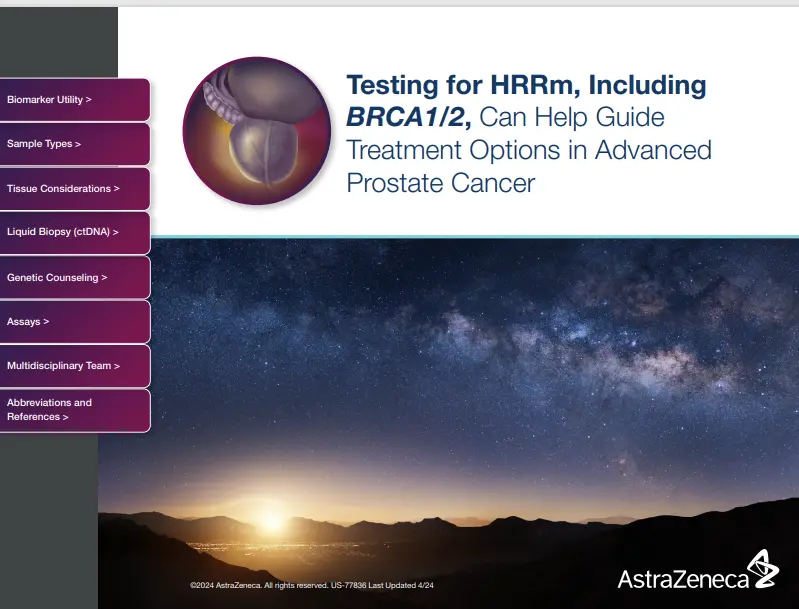
Learn how biomarker testing for mutations in homologous recombination repair (HRR) genes, such as BReast CAncer susceptibility gene 1/2 (BRCA1/2) may be used to help guide treatment decisions.

Testing for homologous recombination repair mutations (HRRm), including BReast CAncer susceptibility gene 1/2 (BRCA1/2), can help guide treatment options in advanced prostate cancer.

Use this interactive PDF as a comprehensive resource for detailed information on prostate cancer and genetic testing.

pdf image

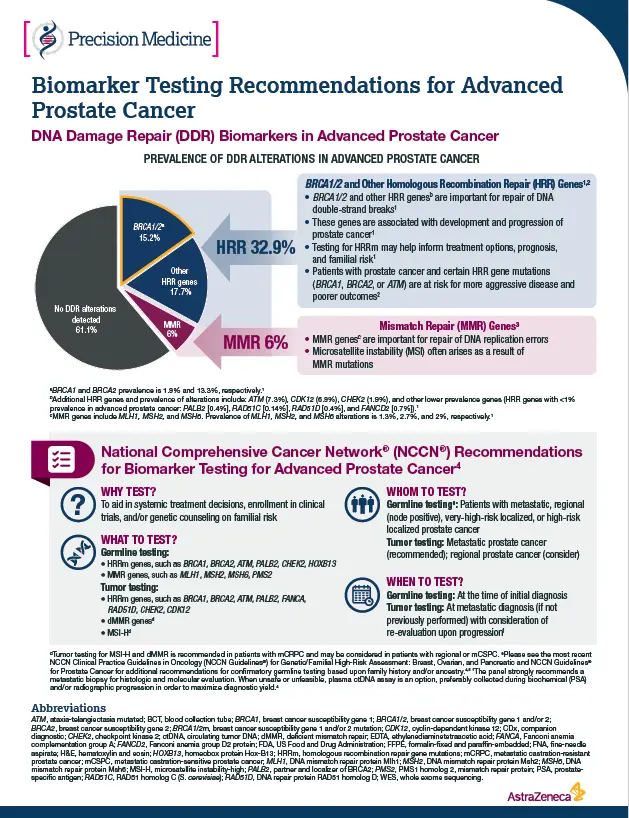
Biomarker testing recommendations for advanced prostate cancer

Review guideline-recommended testing for BReast CAncer susceptibility gene 1/2 (BRCA1/2) and other homologous recombination repair (HRR) gene mutations to help inform treatment decision-making.

pdf image

dummy

View more resources 
Email icon

Subscribe to Emails

Subscribe and stay up to date with information and insights on precision medicine.

Subscribe

Chat box icon

Connect With Us

Contact our Precision Medicine Team for support optimizing testing workflows and increasing MDT collaboration.

Connect with us

MDT, multidisciplinary team.

  1. Jardim DL, et al. J Natl Cancer Inst. 2015;107(11):djv253.
  2. Kato S, et al. Nat Commun. 2020;11(1):4965.
  3. Tsimberidou AM, et al. JCO Precis Oncol. 2017;2017:PO.17.00002.
  4. Bailey MH, et al. Cell. 2018;174(4):1034–1035.
  5. Chakravarty D, et al. J Clin Oncol. 2022;40(11):1231–1258.
  6. Allison KH, et al. J Clin Oncol. 2020;38(12):1346–1366.
  7. Wolff AC, et al. Arch Pathol Lab Med. 2023;147(9):993–1000.
  8. Lindeman NI, et al. Arch Pathol Lab Med. 2018;142(3):321–346.
  9. Referenced with permission from the NCCN Clinical Practice Guidelines in Oncology (NCCN Guidelines®) for Prostate Cancer. V.4.2024. © National Comprehensive Cancer Network, Inc. 2024. All rights reserved. Accessed November 27, 2024. To view the most recent and complete version of the guideline, go online to NCCN.org
  10. Referenced with permission from the NCCN Clinical Practice Guidelines in Oncology (NCCN Guidelines®) for Ovarian Cancer Including Fallopian Tube Cancer and Primary Peritoneal Cancer. V.3.2024. © National Comprehensive Cancer Network, Inc. 2024. All rights reserved. Accessed October 01, 2024. To view the most recent and complete version of the guideline, go online to NCCN.org
  11. Referenced with permission from the NCCN Clinical Practice Guidelines in Oncology (NCCN Guidelines®) for Breast Cancer. V.6.2024. © National Comprehensive Cancer Network, Inc. 2024. All rights reserved. Accessed November 11, 2024. To view the most recent and complete version of the guideline, go online to NCCN.org
  12. Referenced with permission from the NCCN Clinical Practice Guidelines in Oncology (NCCN Guidelines®) for Non-Small Cell Lung Cancer. V.11.2024. © National Comprehensive Cancer Network, Inc. 2024. All rights reserved. Accessed October 15, 2024. To view the most recent and complete version of the guideline, go online to NCCN.org
  13. Yi T, et al. Int J Cancer. 2019;145(5):1209–1220.
  14. John A, et al. Oncologist. 2020;25(11):e1743–e1752.
  15. Singal G, et al. JAMA. 2019;321(14):1391–1399.
  16. Schwaederle M, et al. JAMA Oncol. 2016;2(11):1452–1459.
  17. Haslem DS, et al. J Oncol Pract. 2017;13(2):e108–e119.
  18. Tsimberidou AM, et al. J Hematol Oncol. 2019;12(1):145.
  19. Sadik H, et al. JCO Precis Oncol. 2022;6:e2200246.
  20. Aldrighetti CM, et al. JAMA Netw Open. 2021;4(11):e2133205.
  21. Norris RP, et al. BMC Med. 2020;18(1):282.
  22. Goldfarb SD, et al. J Clin Oncol. 2021;39(28_suppl):16.
  23. Fortune EE, et al. Patient Educ Couns. 2023;112:107720.
  24. Lillard JW, et al. Cancer. 2022;128(21):3783–3795.
  25. Hooper K, et al. J Clin Oncol. 2022;[abstract taken from 40(16):3127].
  26. Braxton DR, et al. J Clin Oncol. 2021;[abstract taken from 39(15):e13507].
  27. Anand K, et al. Clin Lung Cancer. 2020;21(5):437–442.
  28. Tsang M, et al. Arch Pathol Lab Med. 2022;146(12):1535–1539.
  29. Seidman AD, et al. Popul Health Manag. 2017;20(4):252–254.
  30. Cohen SA, et al. Am Soc Clin Oncol Educ Book. 2019;39:e34–e44.
  31. Strickland-Marmol LB, et al. Arch Pathol Lab Med. 2016;140(6):578–587.
  32. Salgia R, et al. JCO Oncol Pract. 2021;17(8):e1120–e1130.
  33. Sadaps M, et al. JCO. 2021;39(15):suppl.3128.
  34. Behel V, et al. JCO Glob Oncol. 2022;8:e2200030.
  35. Gorin SS, et al. Ann Behav Med. 2017;51(4):532–546.
  36. Cancer Protocol Templates. College of American Pathologists. Accessed October 01, 2024. https://www.cap.org/protocols-and-guidelines/cancer-reporting-tools/cancer-protocol-templates

NCCN makes no warranties of any kind whatsoever regarding their content, use or application and disclaims any responsibility for their application or use in any way.

AstraZenecaYouTube Icon

This information is intended for US healthcare professionals only.

Connect With Us Subscribe to Emails Sitemap
Privacy Notice Legal StatementAstraZeneca US Corporate Site Contact Us
Cookie Policy Cookie Notice Consumer Health Data Privacy Notice Your Privacy ChoicesYour Privacy ChoicesYour Privacy Choices

©2025 AstraZeneca. All rights reserved. US-86234; US-101129 Last Updated: 10/25

Share Resource

Share your precision medicine resource(s) via social media or email.

Share to Apps

{{$.copyrighttext}}

©2024 AstraZeneca. All rights reserved. US-86234 Last Updated 11/24

  • Share via  LinkedIn
  • Share via  Facebook
  • Share via  X
  • Share via  Doximity
Share via Email
To add multiple email addresses, please separate them with a comma (e.g. email1@domain.com, email2@domain.com)

errorMessage

requestToSignInContent

Welcome to

AZPrecisionMed.com

This website is intended to help healthcare professionals practicing in the US find and access scientifically balanced and evidence-based information and resources on oncology biomarker testing in precision medicine.

The dissemination of this information may be subject to different medical and regulatory requirements in other countries.

This information is provided for educational purposes only. It is not intended for use in the diagnosis or treatment of individual patients.

Are you a healthcare professional in the United States?

No, take me to AstraZeneca-us.com

What is an AstraZeneca authorised person?

This website is only intended for healthcare professionals practicing in the United States and authorized AstraZeneca company persons. US Headquarters personnel, US Field Diagnostics and US Field Medical personnel are authorized to browse and search the database for their own background knowledge and insight. This website is not intended for use by US Field Sales personnel. None of the content on this site should be directly linked or distributed without approval.

©2024 AstraZeneca. All rights reserved. US-86234 Last Updated 11/24

  • Share via  LinkedIn
  • Share via  Facebook
  • Share via  X
  • Share via  Doximity
Share via Email
To add multiple email addresses, please separate them with a comma (e.g. email1@domain.com, email2@domain.com)

errorMessage

requestToSignInContent

Share Resource

Share your precision medicine resource(s) via social media or email.

Share to Apps

©2024 AstraZeneca. All rights reserved. US-86234 Last Updated 11/24