AZ Logo Skip To Content
  • Tumor Types & BiomarkersTumor Types & Biomarkers

    Tumor Types & Biomarkers

    Explore clinical guidelines on why, whom and how to test actionable biomarkers in lung, breast, ovarian and prostate cancers.

    • Lung Tumor
      • EGFR
      • ERBB2 (HER2)
    • Breast Tumor
      • BRCA1/2
      • ESR1
      • HER2
      • PIK3CA/AKT1/PTEN
    • Ovarian Tumor
      • HRD
    • Prostate Tumor
      • HRRm
      • PTEN
  • Testing Solutions
  • Explore Precision MedicineTumor Types & Biomarkers

    Explore Precision Medicine

    Implement best practices in your workflow and discover how recent advances are optimizing precision medicine.

    Realizing the Potential of Precision Medicine

    Collaborate across the MDT to address health inequities and optimize testing pathways.

    Realizing the Potential of Precision Medicine

    Latest Developments in Precision Medicine

    Explore recent advances in diagnostic technologies and novel biomarkers to support precision medicine in your practice.

    Latest Developments in Precision Medicine
  • ResourcesTumor Types & Biomarkers

    Resources

    Access a range of resources you can apply in your practice.

    FAQs

    Find answers to frequently asked questions about precision medicine.

    FAQs

    Find a Testing Lab

    Search our directory of major laboratories that perform diagnostic biomarker testing.

    Find a Testing Lab

    Glossary

    Find definitions for the most commonly used terms in precision medicine.

    Glossary

    Resource Library

    Explore our library of videos and downloadable tools to help optimize your practice and inform your patients.

    Resource Library

    My Favorites

    Personalize your learning by creating a bespoke collection of precision medicine resources.

    My Favorites
  • Our Team
Subscribe Connect with us
Open MenuClose Menu

Search

  • Home Icon
  • Breast Cancer

  • Breast Cancer

checking the code

Breast cancer constellation icon

Precision Medicine for Breast Cancer

Discover guideline-recommended actionable and emerging biomarkers in breast cancer.

Reading time:15 min
 
Jump to:
  • Testing Recommendations
  • Biomarkers Informing Treatment Options
  • Prevalent Actionable Biomarkers
  • Considerations for Your Practice
  • Helpful Resources

Biomarker Testing is Transforming the Management of Breast Cancer

Female breast cancer is the fourth leading cause of cancer death in the United States, but
biomarker testing may contribute to lowering premature death from cancer, including breast.1,2

Female breast cancer is the fourth leading cause of cancer death in the United States, but biomarker testing may contribute to lowering premature death from cancer, including breast.1,2

Breast Cancer Icon

Breast Cancer Biomarker Testing Recommendations Are Integral to Treatment Decisions

NCCN Clinical Practice Guidelines In Oncology (NCCN Guidelines®) recommend testing for all eligible patients.3

Biomarker testing has become an integral part of breast cancer care; the National Comprehensive Cancer Network® (NCCN®) recommends that all patients with newly diagnosed primary or metastatic breast cancer undergo HER2 and HR testing to inform clinical decision making.3 Multigene panel testing (MGPT) (somatic and germline) for recurrent and metastatic cancer is also recommended to identify candidates for appropriate therapies.3

Align to NCCN Guidelines® for specific treatment recommendations in each setting.3

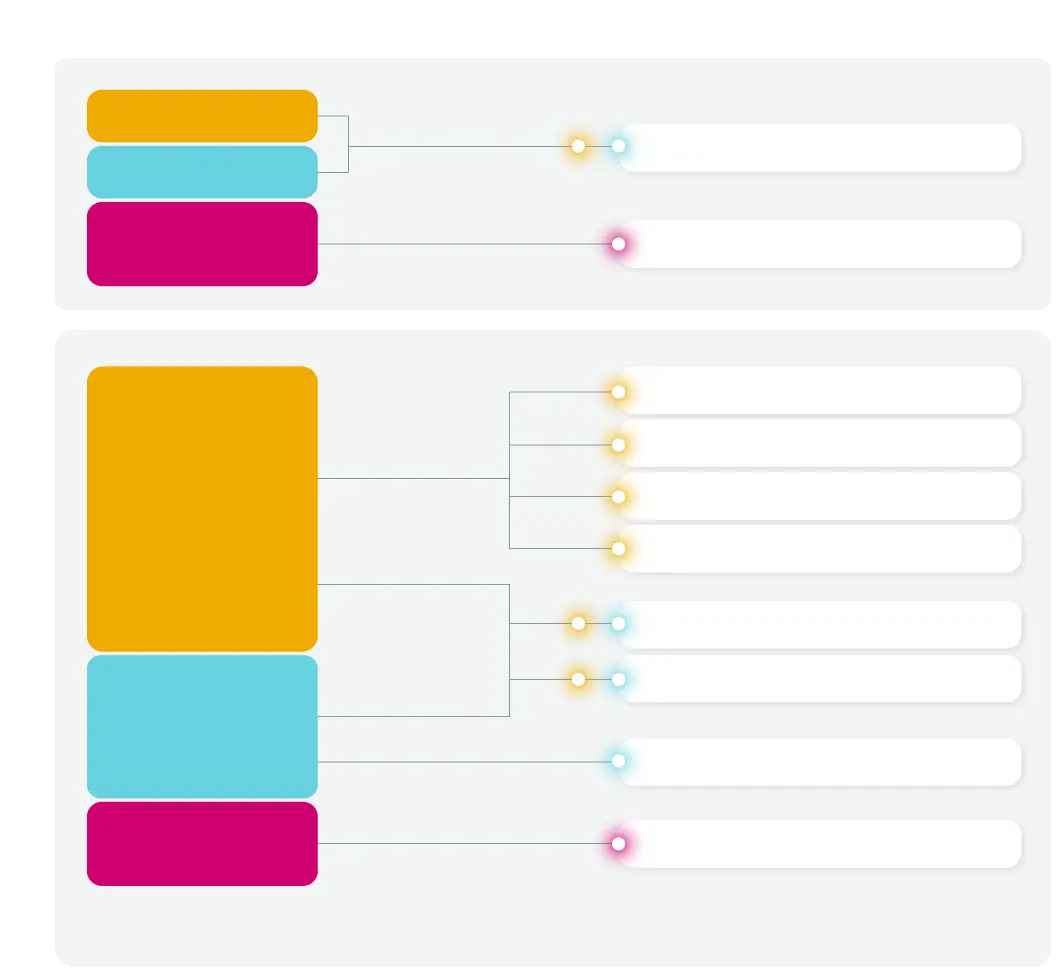
NCCN Guidelines Chart
Subtype

Early breast cancer

HR+/HER2-negative

TNBC

If high-risk after surgery

Actionable biomarkers

Germline BRCA1/2 mutations

gBRCA status may inform surgical decisions

Recurrent unresectable (local or regional) or metastatic diseaseb

HR+/HER2-negative

TNBC

HR+/HER2-positivea
and HR-/HER2-positive

HR+/HER2-positive
and HR-/HER2-positive

HER2-positive

PIK3CA activating mutations

AKT1 activating mutation

PTEN inactivating alterations

ESR1 mutation

HER2-low expressionc

Germline BRCA1/2 mutations

PD-L1 expression

HER2-positive

NCCN Guidelines Chart

Subtypes and common
actionable biomarkersa 
across cancer stages

Early breast cancer

HR+/HER2-negative

TNBC

If high risk
after surgery

Germline BRCA1/2 mutations

HER2-positive

HR+/HER2-negative

Recurrent unresectable (local or
regional) or metastatic diseaseb

gBRCA status may inform surgical decisions

HR+/HER2-positivea and HR-/HER2-positive

PIK3CA activating mutations

ATK1 activating mutations

PTEN inactivating mutations

ESR1 mutations

HER2-low expressionc

Germline BRCA1/2 mutations

TNBC

HER2-low expressionc

Germline BRCA1/2 mutations

PD-L1 expression

HR+/HER2-positive and HR-/HER2-positive

HER2-positive

To view the most recent and complete version of the guideline, go online to NCCN.org.

aHER2-positive: IHC3+ or 2+/ISH+.

bHigh-risk criteria include stage II–III TNBC.

bNTRK, RET, TMB and MSI are less common biomarkers that apply to HR+/HER2-negative, TNBC and HER2-positive breast cancers.3–8

cHER2-low: IHC1+ or 2+/ISH-.9

AKT1, serine/threonine kinase 1; gBRCA1/2, germline BReast CAncer susceptibility gene 1/2; ESR1, estrogen receptor 1; HER2, human epidermal growth factor receptor 2; HR, hormone receptor; IHC, immunohistochemistry; ISH, in situ hybridization; MSI, microsatellite instability; NCCN, National Comprehensive Cancer Network; NTRK, neurotrophic tyrosine receptor kinase; PD-L1, programmed death-ligand 1; PIK3CA, phosphatidylinositol-4,5-bisphosphate 3-kinase catalytic subunit alpha; PTEN, phosphatase and tensin homolog; RET, rearranged during transfection; TMB, tumor mutational burden; TNBC, triple-negative breast cancer.

Practice HER2 IHC scoring and view peer-led educational resources.

Visit HER2Know.com
HER2 IHC Educational Resources
Biomarkers Icon

Full Knowledge of the Extent of Disease and Biomarkers is Central to Informing Treatment Options3

Non-metastatic invasive breast cancer3

    Testing Methodology
  Biomarker NGS PCR ISH/FISH IHC Germline sequencing
Subtyping by HR expression HR+      


Established

biomarkers

HER2-positive (IHC 3+ or 2+/ISH+)    


Germline BRCA1/2 mutations        
 
Ki-67      


Recurrent unresectable or metastatic breast cancer3

    Testing Methodology
  Biomarker NGS PCR ISH/FISH IHC Germline sequencing
Subtyping by HR expression HR+      


Established

biomarkers

HER2-positive (IHC 3+ or 2+/ISH+)    


HER2-low (IHC 1+ or 2+/ISH-) expression    


Germline BRCA1/2 mutations        
 
Germline PALB2 mutations        
 
ESR1 mutation


PIK3CA activating mutations


AKT1 activating mutation


PTEN inactivating alterations


NTRK fusion


MSI-H/dMMR


TMB-H
 
       
RET-fusion
 
       
PD-L1      
 
 
Biopsy Sample Icon

The accuracy of results relies on optimal preparation of the biopsy sample, so it is crucial that the multidisciplinary team (MDT) work together to ensure all preanalytical requirements are met.

AKT1, serine/threonine kinase 1; BRCA1/2, BReast CAncer susceptibility gene 1/2; dMMR, deficient mismatch repair; ESR1, estrogen receptor 1; FDA, US Food and Drug Administration; FISH, fluorescence in situ hybridization; HER2, human epidermal growth factor receptor 2; HR, hormone receptor; IHC, immunohistochemistry; ISH, in situ hybridization; Ki-67, antigen Kiel 67; MDT, multidisciplinary team; MSI-H, microsatellite instability high; NGS, next-generation sequencing; NTRK, neurotrophic tyrosine receptor kinase; PCR, polymerase chain reaction; PD-L1, programmed death-ligand 1; PIK3CA, phosphatidylinositol-4,5-bisphosphate 3-kinase catalytic subunit alpha; PTEN, phosphatase and tensin homolog; RET, rearranged during transfection; TMB-H, tumor mutational burden high.

HER2 Expression Icon

HER2 Expression, ESR1 Mutations, PIK3CA Activating Mutations, and PD-L1 Are Some of the Most Prevalent Actionable Biomarkers That Can Inform Clinical Decision Making

  Biomarkers Prevalence Relevant subtype

Established

biomarkers3

HER2-positive (IHC 3+ or 2+/ISH+) ~15%9 HR+ or HR-3
HER2-low (IHC 1+ or 2+/ISH-) expression ~50%9,10 HR+ or HR-3
Germline BRCA1/2 mutations ~5–10%11–13 Any subtype3
Germline PALB2 mutations ~1%14 Any subtype3
ESR1 mutation 20–40% (metastatic breast cancer)15,a HR+/HER2-negative3
PIK3CA activating mutations Up to 40%16,17
AKT1 activating mutation 1.4–6.3%18,19
PTEN inactivating alterations ~5%17
NTRK fusion <5%4 Any subtype3
MSI-H/dMMR 0.6–1.9%7,8
TMB-H 5%6
RET-fusion ~1.2%5
PD-L1 50% (metastatic TNBC)20 HR-/HER2-negative (TNBC)3

Emerging

biomarkers3

HER2 (ERBB2) activating mutation 11%21,b HR+ or HR-/HER2-negative3
Somatic BRCA1/2 mutations ~1.2%22,c Any subtype3
FGRFR1-3 fusion/mutation ~15%23 Any subtype3

aRepresents prevalence after 6 months on an aromatase inhibitor.15

b>90% are HER2 negative (IHC/FISH).21

csBRCAm.22

AKT1, serine/threonine kinase 1; BRCA1/2, BReast CAncer susceptibility gene 1/2; dMMR, deficient mismatch repair; ERBB2, erythroblastic leukemia viral oncogene homolog 2; ESR1, estrogen receptor 1; FDA, US Food and Drug Administration; FISH, fluorescence in situ hybridization; HER2, human epidermal growth factor receptor 2; IHC, immunohistochemistry; ISH, in situ hybridization; MSI-H, microsatellite instability high; NTRK, neurotrophic tyrosine receptor kinase; PALB2, partner and localizer of BRCA2; PD-L1, programmed death-ligand 1; PIK3CA, phosphatidylinositol-4,5-bisphosphate 3-kinase catalytic subunit alpha; PTEN, phosphatase and tensin homolog; RET, rearranged during transfection; TMB-H, tumor mutational burden high; TNBC, triple-negative breast cancer.

Breast Cancer Treatment Icon

HER2 Expression, Germline BRCA1/2m, ESR1 Mutations, and PIK3CA/AKT1/PTEN Alterations Can Indicate Eligibility for Targeted Treatment in Certain Patients With Breast Cancer24

Assess all eligible patients for actionable biomarkers and find out more about how these can inform care.24

Why test for HER2 Why test for BRCA1/2m Why test for ESR1 mutations Why test for PIK3CA/AKT1/PTEN alterations

AKT1, serine/threonine kinase 1; BRCA1/2m, BReast CAncer susceptibility gene 1/2 mutation; ESR1, estrogen receptor 1; HER2, human epidermal growth factor receptor; PIK3CA, phosphatidylinositol-4,5-bisphosphate 3-kinase catalytic subunit alpha; PTEN, phosphatase and tensin homolog.

Guidelines Document Icon

Considerations for Your Practice

Initiate, action, or review MDT protocols for identifying patients eligible for biomarker testing.3

  • Test for actionable biomarkers in breast cancer including HER2, germline BRCA1/2m, ESR1 mutations, and PIK3CA/AKT1/PTEN alterations3
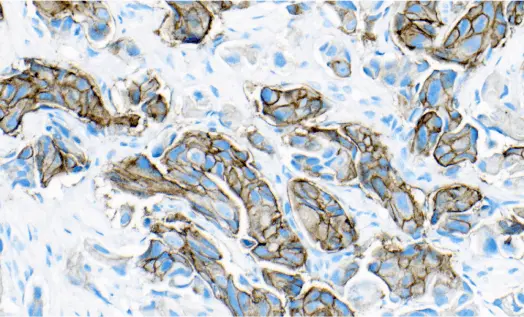
    • How comprehensively HER2 IHC results are reported can have implications for patient care; it is important to record discrete scores and presence of staining
  • Gene&i Logo

    Visit Gene&i.com for a suite of educational resources to support clinical conversations about genetic testing between you and patients with breast cancer.

    Gene&i.com
  • Find a Testing Lab which can perform biomarker testing for your patients*

AKT1, serine/threonine kinase 1; BRCA1/2m, BReast CAncer susceptibility gene 1/2 mutation; ESR1, estrogen receptor 1; HER2, human epidermal growth factor receptor 2; IHC, immunohistochemistry; MDT, multidisciplinary team; PIK3CA, phosphatidylinositol-4,5-bisphosphate 3-kinase catalytic subunit alpha; PTEN, phosphatase and tensin homolog.

*This information is intended as educational and is not intended as a complete list of available testing options. AstraZeneca is not responsible for any test provider and does not endorse any particular diagnostic test. The accuracy and results of diagnostic tests vary, and AstraZeneca shall have no liability arising from such testing. Information provided herein should in no way be considered a guarantee of coverage, reimbursement, or patient assistance. Providers should contact third-party laboratories for information on their patient assistance programs. While diagnostic testing may assist providers in identifying appropriate treatment for patients, the decision and action should be decided by a provider in consultation with the patient. All products are trademarks of their respective holders, all rights reserved.

Helpful Resources

Check out these featured resources on biomarker testing in breast cancer.

Playlist Icon

Add your preferred resources to My Favorites—a personalized list of resources to download and share with your peers or patients.

View My Favorites

dummy

View more resources 
Email Icon

Subscribe to Emails

Subscribe and stay up to date with biomarker testing in breast cancer.

Subscribe

Chat Icon

Connect With Us

Connect with our Precision Medicine Team for support with breast cancer biomarker testing in your practice.

Connect with us

  1. National Cancer Institute. Cancer Stat Facts: Female Breast Cancer. Accessed November 24, 2025. https://seer.cancer.gov/statfacts/html/breast.html
  2. D Avó Luís AB, Seo MK. Eur J Health Econ. 2021;22:789–810.
  3. Referenced with permission from the NCCN Clinical Practice Guidelines in Oncology (NCCN Guidelines®) for Breast Cancer V.2.2026. © National Comprehensive Cancer Network, Inc. 2026. All rights reserved. Accessed February 27, 2026. To view the most recent and complete version of the guideline, go online to NCCN.org.
  4. Kim J, et al. Cancer Res. 2022;82(4_Supplement):P3-13–08.
  5. Pecar G, et al. Breast Cancer Res. 2023;25:26.
  6. Barroso-Sousa R, et al. Cancers (Basel). 2023;15:3997.
  7. Vidula N, et al. NPJ Breast Cancer. 2022;8:117.
  8. Cheng AS, et al. Breast Cancer Res Treat. 2020;179:3–10.
  9. Tarantino P, et al. J Clin Oncol. 2020;38(17):1951–1962.
  10. Schettini F, et al. NPJ Breast Cancer. 2021;7(1):1.
  11. Høberg-Vetti H, et al. Eur J Hum Genet. 2016;24:881–888.
  12. Winter C, et al. Ann Oncol. 2016;27:1532–1538.
  13. Shao C, et al. Abstract presented at: American Society of Clinical Oncology Annual Meeting; 4–8 June, 2021; virtual. Abstract 10589.
  14. Yadav S, et al. J Clin Oncol. 2023;41(9):1703–1713.
  15. Dustin D, et al. Cancer. 2019;125(21):3714–3728.
  16. Cizkova M, et al. Breast Cancer Res. 2012;14:R28.
  17. Li G, et al. PLoS One. 2018;13(9):e0203495.
  18. Rudolph M, et al. BMC Cancer. 2016;16:622.
  19. Stemke-Hale K, et al. Cancer Res. 2008;68(15):6084–6091.
  20. Oner G, et al. World J Surg Oncol. 2021;19(1):264.
  21. Deniziaut G, et al. Oncotarget. 2016;7(45):73337–73346.
  22. Balmaña J, et al. Breast Cancer Res Treat. 2023;204(2):237-248. doi:10.1007/s10549-023-07165-x
  23. Zhang P, et al. J Hematol Oncol. 2024;17:39.
  24. Subhan MA, et al. Cancers (Basel). 2023;15:2204.

NCCN makes no warranties of any kind whatsoever regarding their content, use or application and disclaims any responsibility for their application or use in any way.

AstraZenecaYoutube

This information is intended for US healthcare professionals only.

Connect With Us Subscribe to Emails Sitemap
Privacy Notice Legal StatementAstraZeneca US Corporate Site Contact Us
Cookie Policy Cookie Notice Consumer Health Data Privacy Notice Your Privacy ChoicesYour Privacy ChoicesYour Privacy Choices

©2025 AstraZeneca. All rights reserved. US-105746 Last Updated 12/25

Share Resource

Share your precision medicine resource(s) via social media or email.

Share to Apps

{{$.copyrighttext}}

©2024 AstraZeneca. All rights reserved. US-86234 Last Updated 11/24

  • Share via  LinkedIn
  • Share via  Facebook
  • Share via  X
  • Share via  Doximity
Share via Email
To add multiple email addresses, please separate them with a comma (e.g. email1@domain.com, email2@domain.com)

errorMessage

requestToSignInContent

Welcome to

AZPrecisionMed.com

This website is intended to help healthcare professionals practicing in the US find and access scientifically balanced and evidence-based information and resources on oncology biomarker testing in precision medicine.

The dissemination of this information may be subject to different medical and regulatory requirements in other countries.

This information is provided for educational purposes only. It is not intended for use in the diagnosis or treatment of individual patients.

Are you a healthcare professional in the United States?

No, take me to AstraZeneca-us.com

What is an AstraZeneca authorised person?

This website is only intended for healthcare professionals practicing in the United States and authorized AstraZeneca company persons. US Headquarters personnel, US Field Diagnostics and US Field Medical personnel are authorized to browse and search the database for their own background knowledge and insight. This website is not intended for use by US Field Sales personnel. None of the content on this site should be directly linked or distributed without approval.

©2024 AstraZeneca. All rights reserved. US-86234 Last Updated 11/24

  • Share via  LinkedIn
  • Share via  Facebook
  • Share via  X
  • Share via  Doximity
Share via Email
To add multiple email addresses, please separate them with a comma (e.g. email1@domain.com, email2@domain.com)

errorMessage

requestToSignInContent

Share Resource

Share your precision medicine resource(s) via social media or email.

Share to Apps

©2024 AstraZeneca. All rights reserved. US-86234 Last Updated 11/24