AZ Logo Skip To Content
  • Tumor Types & BiomarkersTumor Types & Biomarkers

    Tumor Types & Biomarkers

    Explore clinical guidelines on why, whom and how to test actionable biomarkers in lung, breast, ovarian and prostate cancers.

    • Lung Tumor
      • EGFR
      • ERBB2 (HER2)
    • Breast Tumor
      • BRCA1/2
      • ESR1
      • HER2
      • PIK3CA/AKT1/PTEN
    • Ovarian Tumor
      • HRD
    • Prostate Tumor
      • HRRm
      • PTEN
  • Testing Solutions
  • Explore Precision MedicineTumor Types & Biomarkers

    Explore Precision Medicine

    Implement best practices in your workflow and discover how recent advances are optimizing precision medicine.

    Realizing the Potential of Precision Medicine

    Collaborate across the MDT to address health inequities and optimize testing pathways.

    Realizing the Potential of Precision Medicine

    Latest Developments in Precision Medicine

    Explore recent advances in diagnostic technologies and novel biomarkers to support precision medicine in your practice.

    Latest Developments in Precision Medicine
  • ResourcesTumor Types & Biomarkers

    Resources

    Access a range of resources you can apply in your practice.

    FAQs

    Find answers to frequently asked questions about precision medicine.

    FAQs

    Find a Testing Lab

    Search our directory of major laboratories that perform diagnostic biomarker testing.

    Find a Testing Lab

    Glossary

    Find definitions for the most commonly used terms in precision medicine.

    Glossary

    Resource Library

    Explore our library of videos and downloadable tools to help optimize your practice and inform your patients.

    Resource Library

    My Favorites

    Personalize your learning by creating a bespoke collection of precision medicine resources.

    My Favorites
  • Our Team
Subscribe Connect with us
Open MenuClose Menu

Search

  • Home Icon
  • Breast cancer

  • ESR1m

  • ESR1m

bolt

Personalize your browsing experience today.

What are you looking for today?

ESR1 Mutations in Breast Cancer

What is the significance of ESR1m in breast cancer?
Explore detailed information, guideline recommendations, and actionable best practices for ESR1m in breast cancer, an early and critical predictor of tumor progression.1,2

ESR1, estrogen receptor 1.

Starry constellation background breast hero image
Reading time: 10 min
 
Jump to:
  • Role of ESR1
  • Prevalence
  • Testing Recommendations
  • ctDNA-Mediated Testing to Detect ESR1m
  • Considerations for Your Practice
  • Helpful Resources
Breast cancer icon

Role of ESR1

ESR1 is the gene encoding estrogen receptor alpha (ERα), a key driver of hormone-dependent cancers1

This is particularly evident in estrogen receptor-positive (ER+) breast cancer, including HR+/HER2-, where ESR1 promotes tumor growth.

ESR1, estrogen receptor 1; HR+, Hormone Receptor-Positive; HER2-, human epidermal growth factor receptor-negative.

ESR1 mutations may promote breast cancer tumor growth through estrogen-mediated transcriptional regulation3

Biomarker DNA icon

Acquired resistance

ESR1m is an acquired mutation that evolves frequently through resistance to endocrine therapy (ET).4-7

Laboratory Test Tube Icon

Proactive identification and ESR1m interpretation 

Identify ESR1m as quickly as possible, as these mutations may lead to disease progression and poorer patient outcomes.4

ESR1, estrogen receptor 1; ESR1m, estrogen receptor 1 mutation.

ESR1 Mutation Prevalence: ESR1 Mutations Are Not Commonly Present at Diagnosis of Metastatic Breast Cancer (mBC) in Patients Who Are Endocrine Therapy (ET) Naive3-8

Test Tube Sample Icon

~6%

~6%

of patients who are ET naive carry an ESR1 mutation, which is detected when tested at mBC diagnosis3,8

Exposure to aromatase inhibitors (AIs) during 1L treatment leads to the emergence of endocrine resistance8,9

Among patients who typically receive AIs in the metastatic setting

Cell Under Magnifying Glass IconCell Under Magnifying Glass Icon

nearly

40%

acquire ESR1 mutations4,9

acquire ESR1 mutations4,9

1L, first-line; AI, aromatase inhibitor.

Test tube sample icon

Testing Recommendations for ESR1m7,9-13

ESR1 mutations may signal development of endocrine resistance9

Early and routine testing for ESR1m in addition to ESR1m analysis provides a pivotal opportunity to impact patient outcomes in breast cancer because its emergence precedes radiographic or clinical evidence of disease progression.7

NCCN Clinical Practice Guidelines in Oncology (NCCN Guidelines®) recommend evaluating ESR1m status through NGS or PCR10

Guidelines Icon

NCCN Guidelines recommend testing ESR1m through liquid biopsy (blood samples).10

Magnifying Glass Examining Cancer Cells Icon

ctDNA is a validated method for identifying ESR1m.11-13

NCCN, National Comprehensive Cancer Network; NGS, next-generation sequencing; PCR, polymerase chain reaction.

ESR1m Testing Options Overview14-32

Laboratory Assay name/platform Technology Sensitivity (VAF) Sample type Turnaround time FDA-approved test
Guardant Health Guardant360® Transpose CDx NGS (Large panel CGP) 0.3-1.0% Plasma (ctDNA) 7 days
 
Foundation Medicine FoundationOne® Liquid CDx NGS (Large panel CGP) 0.33-0.5% Plasma (ctDNA) <10 days
 
Thermo Fisher Scientific Oncomine Precision Assay NGS (Small panel) 0.25% Plasma (ctDNA) 1 day
 
Caris Life Sciences Caris Assure® Liquid Biopsy® NGS (Large panel CGP) 0.05-0.45% Plasma (ctDNA) 7–10 days RUO
Labcorp Labcorp Plasma Complete Portfolio NGS (Large panel CGP) 0.1-0.5% Plasma (ctDNA) 8 days RUO
NeoGenomics NEO PanTracer LBx Assay NGS (Large panel CGP) 0.17-0.31% Plasma (ctDNA) 7 days RUO
Roche AVENIO ctDNA Expanded Kit V2 NGS (Large panel CGP) 0.5% Plasma (ctDNA) 5 days RUO
Thermo Fisher Scientific Oncomine Pan-Cancer Cell-Free Assay NGS (Large panel CGP) 0.1% Plasma (ctDNA) 2 days RUO
Tempus Tempus® xF/xF+ Liquid Biopsy NGS (Large panel CGP) 0.25% Plasma (ctDNA) 7 days RUO
Pillar
Biosciences
OncoRevealTM Essential LBx NGS (Small panel) 0.1% Plasma (ctDNA) ~3 days RUO
Thermo Fisher Scientific OncomineTM Breast cfDNA Assay qPCR/dPCR 0.1% Plasma (ctDNA) 2 days RUO
BioRad Laboratories ddPLEX ESR1 Mutation Detection Kit dPCR 0.010-0.025% Plasma (ctDNA) <8 hours RUO
APIS Assay Technologies ESR1 Mutations qPCR Kit qPCR 0.500% Plasma (ctDNA) 2 hours RUO
Asuragen (Bio-Techne) Quantidex® qPCR ESR1 exoMutation Panel qPCR  0.120-0.150% Plasma (ctDNA) 5–6 hours RUO
QIAGEN QIAcuity® Digital PCR dPCR NR Plasma (ctDNA) ~8 hours RUO
Stilla Technologies Stilla ESR1 (17 mutations) Crystal Digital PCR® Assay  dPCR 0.120–0.150%  Plasma (ctDNA) Not specified RUO
APIS Assay Technologies APIS ESR1 dPCR Kit dPCR 0.100% Plasma (ctDNA) 4 hours RUO

CDx, companion diagnostic; CGP, comprehensive genomic profiling; ctDNA, circulating tumor DNA; ddPCR, droplet digital polymerase chain reaction; dPCR, digital polymerase chain reaction; FDA, US Food and Drug Administration; LBx, liquid biopsy; NGS, next generation sequencing; qPCR, quantitative polymerase chain reaction; RUO, research use only; VAF, variant allelle frequency.

Check List Icon

Utilizing ctDNA-Mediated Testing to Detect ESR1m11

  • ctDNA-mediated testing with liquid biopsy (blood samples) identifies tumor-specific genomic alterations in patients with metastatic breast cancer
  • NGS panel tests should be performed on blood samples
Breast Cancer Outline Icon

NCCN Guidelines do not recommend testing with primary archived tissue given the acquired nature of ESR1m.10

Benefits of ctDNA assays to detect mutations11

  • Test Tube Sample Icon

    Less invasive

  • Validate Icon

    Analytically validated

  • magnifying-glass-icon

    Assesses multiple tumor locations in breast cancer

ctDNA testing options overview24,30,32-34

Method Turnaround time Results Potential impact
NGS 7–14 days Comprehensive genomic data More informed decision-making
PCR 1 day Efficient ESR1 results only(single-gene test) Faster decision-making

Detailed PCR testing overview35

PCR method Detection timing Quantification type Assay type
qPCR Real-time Relative Quantitative with standard curves
dPCR End-point Absolute Qualitative
ddPCR End-point Absolute Qualitative

When determining which method is appropriate for your patient and practice, consider the functional differences between timing, cost, and reporting characteristics.

Key Takeaways Icon

Considerations for Your Practice

Collaboration between pathologists, medical oncologists, or tumor boards on ESR1m testing may help improve patient care.7,36

  • Integrating ctDNA-mediated ESR1m testing into pathology workflows may help to identify the emergence of endocrine resistance, a valuable insight for your care team
  • Evaluating your lab’s capacity for ctDNA-mediated ESR1m testing, especially as demand increases with guideline-based adoption of liquid biopsy testing, enables preparedness
  • Choosing a digital form of ordering vs manual forms improves your ordering experience

View educational resources that can help facilitate testing conversations between you and your patients with breast cancer in the Resource Library.

Helpful Resources

Check out these featured resources on ESR1m biomarker testing in metastatic breast cancer. 

playlist icon

Add your preferred resources to My Favorites—a personalized list of resources to download and share with your peers or patients.

View My Favorites

dummy

email icon

Subscribe to Emails

Subscribe and stay up to date with biomarker testing
in breast cancer.

Subscribe

Chat box icon

Connect With Us

Connect with our Precision Medicine Team for support with breast cancer biomarker testing in your practice.

Connect with us

Explore

Testing Solutions
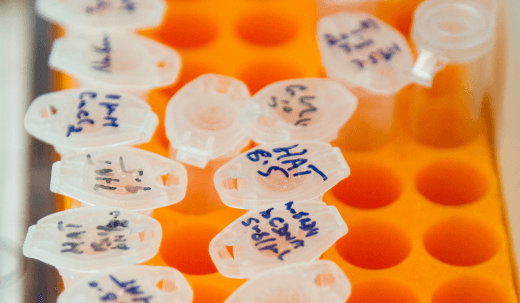
Labeled Lab Sample Tubes

  1. Xia S, Lin Q. Estrogen receptor bio-activities determine clinical endocrine treatment options in estrogen receptor-positive breast cancer. Technol Cancer Res Treat. 2022;21:15330338221090351.
  2. Clatot F, Perdrix A, Beaussire L, et al. Risk of early progression according to circulating ESR1 mutation, CA-15.3 and cfDNA increases under first-line anti-aromatase treatment in metastatic breast cancer. Breast Cancer Res. 2020;22(1):56. doi:10.1186/s13058-020-01290-x
  3. Grinshpun A, Chen V, Sandusky ZM, Fanning SW, Jeselsohn R. ESR1 activating mutations: from structure to clinical application. Biochim Biophys Acta Rev Cancer. 2023;1878(1):188830. doi:10.1016/j.bbcan.2022.188830
  4. Allouchery V, Beaussire L, Perdrix A, et al. Circulating ESR1 mutations at the end of aromatase inhibitor adjuvant treatment and after relapse in breast cancer patients. Breast Cancer Res. 2018;20(1):40. doi:10.1186/s13058-018-0968-0
  5. Beije N, Sieuwerts AM, Kraan J, et al. Estrogen receptor mutations and splice variants determined in liquid biopsies from metastatic breast cancer patients. Mol Oncol. 2018;12(1):48-57. doi:10.1002/1878-0261.12147
  6. Chandarlapaty S, Chen D, He W, et al. Prevalence of ESR1 mutations in cell-free DNA and outcomes in metastatic breast cancer: a secondary analysis of the BOLERO-2 clinical trial. JAMA Oncol. 2016;2(10):1310-1315. doi:10.1001/jamaoncol.2016.1279
  7. Fribbens C, Garcia Murillas I, Beaney M, et al. Tracking evolution of aromatase inhibitor resistance with circulating tumour DNA analysis in metastatic breast cancer. Ann Oncol. 2018;29(1):145-153. doi:10.1093/annonc/mdx483
  8. Bhave MA, Quintanilha JCF, Tukachinsky H, et al. Comprehensive genomic profiling of ESR1, PIK3CA, AKT1, and PTEN in HR(+)HER2(−) metastatic breast cancer: prevalence along treatment course and predictive value for endocrine therapy resistance in real‑world practice. Breast Cancer Res Treat. 2024;207(3):599-609. doi:10.1007/s10549-024-07376-w
  9. Brett JO, Spring LM, Bardia A, Wander SA. ESR1 mutation as an emerging clinical biomarker in metastatic hormone receptor-positive breast cancer. Breast Cancer Res. 2021;23(1):85. doi:10.1186/s13058-021-01462-3
  10. Gradishar WJ, Moran MS, Abraham J, et al. NCCN Guidelines® insights: breast cancer, version 4.2023. J Natl Compr Canc Netw. 2023;21(6):594-608. doi:10.6004/jnccn.2023.0031
  11. Pascual J, Attard G, Bidard FC, et al. ESMO recommendations on the use of circulating tumour DNA assays for patients with cancer: a report from the ESMO Precision Medicine Working Group. Ann Oncol. 2022;33(8):750-768. doi:10.1016/j.annonc.2022.05.520.
  12. Shaw J, Page K, Ambasger B, et al. Serial postoperative ctDNA monitoring of breast cancer recurrence. Abstract 562. J Clin Oncol. 2022;40(16):562. doi:10.1200/JCO.2022.40.16_suppl.562
  13. Gawel SH, Jackson L, Jeanblanc N, Davis GJ. Current and future opportunities for liquid biopsy of circulating biomarkers to aid in early cancer detection. J Cancer Metastasis Treat. 2022;8(5):26. doi:10.20517/2394-4722.2022.13
  14. Guardant Health. Technical information. Accessed October 17, 2025. https://www.guardantcomplete.com/assets/pdf/Guardant360-CDx-Technical-Information-US.pdf
  15. Foundation Medicine. FoundationOne®Liquid CDx: Technical specifications. Accessed October 17, 2025. https://www.foundationmedicine.com/sites/default/files/media/documents/2023-10/F1LCDx_Technical_Specs_072021-2.pdf
  16. Foundation Medicine. Our Proven Portfolio. That’s Our Foundation. Accessed November 19, 2025. https://www.foundationmedicine.com/portfolio
  17. ThermoFisher. Oncomine Precision Assay on the Genexus System. Accessed October 17, 2025. https://www.thermofisher.com/us/en/home/clinical/preclinical-companion-diagnostic-development/oncomine-oncology/oncomine-precision-assay.html
  18. Caris Life Sciences. Caris Assure: Technical Specifications 2025. https://d35ibn74wp9llh.cloudfront.net/000d31fd-e04b-4936-be1c-11acbe19e1ec/f55d2c47-6ce2-4429-ac40-14e89e5e7b10/f55d2c47-6ce2-4429-ac40-14e89e5e7b10_source__v.pdf
  19. Labcorp. Labcorp Plasma Complete Portfolio Brochure. Accessed October 30, 2025. https://oncology.labcorp.com/sites/default/files/2025-01/683903_DX_BRO_PlasmaComplete_FINAL-0125%20%281%29.pdf
  20. NeoGenomics. PanTracer for Pharma Partners. Accessed October 31, 2025. https://www.neogenomics.com/PanTracer-LDT/
  21. Pipinikas C, Patel KB, Vyas H, et al. Analytical validation and clinical performance of a plasma-based CGP assay, NEO | PanTracer LBx. J Clin Oncol. 2025;43(16):e15047. doi:10.1200/JCO.2025.43.16_suppl.e15047
  22. Roche. AVENIO ctDNA Expanded Kit V2. Accessed October 30, 2025. https://sequencing.roche.com/us/en/products/group/avenio-ctdna-expanded-kits.html#productInfo
  23. ThermoFisher. Oncomine Pan-Cancer Cell-Free Assay. Accessed October 30, 2025. https://www.thermofisher.com/order/catalog/product/A31183
  24. Tempus. Tempus xF/xF+ liquid biopsy. Accessed October 17, 2025. https://www.tempus.com/oncology/genomic-profiling/xf/
  25. Pillar Biosciences. Essential LBx Panel. Accessed October 30, 2025. https://www.pillarbiosci.com/wp-content/uploads/2024/09/MK-0050-oncoReveal-Essential-LBx-5.2024_v1.3.pdf
  26. Thermo Fisher Scientific. Oncomine™ Breast cfDNA research assay v2. Accessed November 19, 2025. https://www.thermofisher.com/order/catalog/product/A35865
  27. BioRad Laboratories. ddPLEX ESR1 Mutation Detection Kit. Accessed October 31, 2025. https://www.bio-rad.com/en-us/product/ddplex-esr1-mutation-detection-kit?ID=898d06be-e112-8974-31f4-0c1986580c7b
  28. APIS Assay Technologies. ESR1 Mutations qPCR Kit. Accessed October 31, 2025. https://static1.squarespace.com/static/5e8c8b846bab995ffb19007a/t/6839cfc32132492fa710cc80/1748619204140/APIS+ESR1+qPCR+Kit+Flyer.pdf
  29. Asuragen (Bio-Techne). QuantideX® qPCR ESR1 exoMutation Kit. Accessed October 30, 2025. https://asuragen.com/wp-content/uploads/2025/07/quantidex-qpcr-esr1-exomutation-kit-0625.pdf
  30. QIAGEN. QiAcuity Digital PCR. Accessed October 30, 2025. https://www.qiagen.com/us/products/instruments-and-automation/pcr-instruments/qiacuity-digital-pcr-system?cmpid=CM_PCR_dPCR_Traffic_0123_SEA_GA_NA&s_kwcid=AL!16953!3!701019953208!p!!g!!qiagen%20qiacuity&gad_source=1&gad_campaignid=16142545878&gbraid=0AAAAAD-RrCzuBzTuKHor8xjHwawiP0lpK&gclid=EAIaIQobChMIirCX6Y7WkAMVu2dHAR1I5A8bEAAYASAAEgLlN_D_BwE
  31. Stilla Technologies. ESR1 (17 Mutations) Crystal Digital PCR® Assay. Accessed October 30, 2025. https://go.stillatechnologies.com/assay/esr1-17-mutations-crystal-digital-pcr-r-assay
  32. APIS Assay Technologies. APIS ESR1 dPCR Kit. Accessed October 30, 2025. https://www.apisassay.com/apis-esr1-dpcr-kit
  33. CD Genomics. Hybridization capture vs PCR amplification – the two enrichment strategies in NGS. Accessed September 9, 2024. https://www.cd-genomics.com/microbioseq/hybridization-capture-vs-pcr-amplification.html#:~:text=Generally% 20speaking%2C%20amplicon%2Dbased%20approaches,above%20factors%20worth%20careful%20consideration
  34. Lee N, Park MJ, Song W, Jeon K, Jeong S. Currently applied molecular assays for identifying ESR1 mutations in patients with advanced breast cancer. Int J Mol Sci. 2020;21(22):8807. doi:10.3390/ijms21228807
  35. Quan PL, Sauzade M, Brouzes E. dPCR: a technology review. Sensors (Basel). 2018;18(4):1271. doi:10.3390/s18041271
  36. Guerini-Rocco E, Venetis K, Cursano G, et al. Standardized molecular pathology workflow for ctDNA-based ESR1 testing in HR+/HER2- metastatic breast cancer. Crit Rev Oncol Hematol. 2024;201:104427.

NCCN makes no warranties of any kind whatsoever regarding their content, use or application and disclaims any responsibility for their application or use in any way.

AstraZenecaYoutube

This information is intended for US healthcare professionals only.

Connect With Us Subscribe to Emails Sitemap
Privacy Notice Legal StatementAstraZeneca US Corporate Site Contact Us
Cookie Policy Cookie Notice Consumer Health Data Privacy Notice Your Privacy ChoicesYour Privacy ChoicesYour Privacy Choices

©2024 AstraZeneca. All rights reserved. PP‑US‑8201a‑1976, US-103623 Last Updated 12/2025

©2025 AstraZeneca. All rights reserved. US-103623 Last Updated 12/25

Share Resource

Share your precision medicine resource(s) via social media or email.

Share to Apps

{{$.copyrighttext}}

©2024 AstraZeneca. All rights reserved. US-86234 Last Updated 11/24

  • Share via  LinkedIn
  • Share via  Facebook
  • Share via  X
  • Share via  Doximity
Share via Email
To add multiple email addresses, please separate them with a comma (e.g. email1@domain.com, email2@domain.com)

errorMessage

requestToSignInContent

Welcome to

AZPrecisionMed.com

This website is intended to help healthcare professionals practicing in the US find and access scientifically balanced and evidence-based information and resources on oncology biomarker testing in precision medicine.

The dissemination of this information may be subject to different medical and regulatory requirements in other countries.

This information is provided for educational purposes only. It is not intended for use in the diagnosis or treatment of individual patients.

Are you a healthcare professional in the United States?

No, take me to AstraZeneca-us.com

What is an AstraZeneca authorised person?

This website is only intended for healthcare professionals practicing in the United States and authorized AstraZeneca company persons. US Headquarters personnel, US Field Diagnostics and US Field Medical personnel are authorized to browse and search the database for their own background knowledge and insight. This website is not intended for use by US Field Sales personnel. None of the content on this site should be directly linked or distributed without approval.

©2024 AstraZeneca. All rights reserved. US-86234 Last Updated 11/24

  • Share via  LinkedIn
  • Share via  Facebook
  • Share via  X
  • Share via  Doximity
Share via Email
To add multiple email addresses, please separate them with a comma (e.g. email1@domain.com, email2@domain.com)

errorMessage

requestToSignInContent

Share Resource

Share your precision medicine resource(s) via social media or email.

Share to Apps

©2024 AstraZeneca. All rights reserved. US-86234 Last Updated 11/24