AZ Logo Skip To Content
  • Tumor Types & BiomarkersTumor Types & Biomarkers

    Tumor Types & Biomarkers

    Explore clinical guidelines on why, whom and how to test actionable biomarkers in lung, breast, ovarian and prostate cancers.

    • Lung Tumor
      • EGFR
      • ERBB2 (HER2)
    • Breast Tumor
      • BRCA1/2
      • ESR1
      • HER2
      • PIK3CA/AKT1/PTEN
    • Ovarian Tumor
      • HRD
    • Prostate Tumor
      • HRRm
      • PTEN
  • Testing Solutions
  • Explore Precision MedicineTumor Types & Biomarkers

    Explore Precision Medicine

    Implement best practices in your workflow and discover how recent advances are optimizing precision medicine.

    Realizing the Potential of Precision Medicine

    Collaborate across the MDT to address health inequities and optimize testing pathways.

    Realizing the Potential of Precision Medicine

    Latest Developments in Precision Medicine

    Explore recent advances in diagnostic technologies and novel biomarkers to support precision medicine in your practice.

    Latest Developments in Precision Medicine
  • ResourcesTumor Types & Biomarkers

    Resources

    Access a range of resources you can apply in your practice.

    FAQs

    Find answers to frequently asked questions about precision medicine.

    FAQs

    Find a Testing Lab

    Search our directory of major laboratories that perform diagnostic biomarker testing.

    Find a Testing Lab

    Glossary

    Find definitions for the most commonly used terms in precision medicine.

    Glossary

    Resource Library

    Explore our library of videos and downloadable tools to help optimize your practice and inform your patients.

    Resource Library

    My Favorites

    Personalize your learning by creating a bespoke collection of precision medicine resources.

    My Favorites
  • Our Team
Subscribe Connect with us
Open MenuClose Menu

Search

  • Home Icon
  • Breast cancer

  • BRCA1/2

  • BRCA1/2

bolt

Personalize your browsing experience today.

What are you looking for today?

BRCA1/2 Mutations in Breast Cancer

Explore BRCA1/2 mutation testing in breast cancer with guideline recommendations and actionable best practices.

Starry constellation background breast hero image
Reading time: 20 min
 
Jump to:
  • Clinical Relevance
  • Testing Recommendations
  • Prevalence
  • Role of BRCA1/2
  • Sample Type Considerations
  • Diagnostic Assays
  • Interpreting & Reporting
  • Testing Challenges
  • Considerations for Your Practice
  • Helpful Resources

Testing for Germline BRCA1 and BRCA2 Mutations Can Guide Treatment1–3

Mutations in BRCA1 and BRCA2 are associated with a high lifetime risk of developing breast cancer.1 Testing for these mutations in eligible patients with breast cancer can inform preventative, prognostic and therapeutic decisions.2,3

BRCA1/2, BReast CAncer susceptibility gene 1/2.

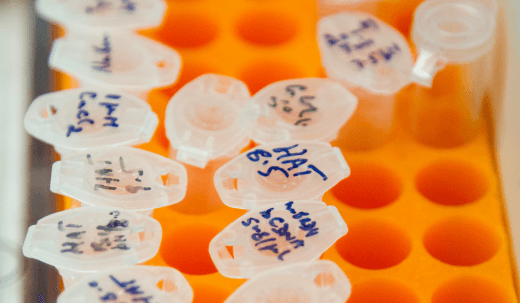
Test tubes

BRCA1 and BRCA2 Testing Recommendations Aim to Identify the Risk of Developing Breast Cancer and Inform Treatment1

Find additional recommendations in the NCCN Clinical Practice Guidelines In Oncology (NCCN Guidelines®) for Genetic/Familial High-Risk Assessment: Breast, Ovarian, Pancreatic, and Prostate.1

  1. Non-metastatic invasive breast cancer
  2. Metastatic breast cancer
Biomarker DNA icon

Why test

  • To aid in systemic treatment decisions2–4
  • To assess risk of recurrence4
  • To assess familial risk for breast, ovarian, pancreatic and prostate cancer1
Confused individual icon

Whom to test

  • All patients with TNBC upon diagnostic work-up4
  • Certain patientsa with HR+/HER2-negative invasive breast cancer upon diagnostic work-up2,3
Laboratory microscope icon

How to test

  • Commercial assays, including multigene panels, are available for germline testing of BRCA1 and BRCA2 mutations5,b
  • Perform germline testing on blood or saliva/buccal swabs5
  • Use the FDA-approved BRACAnalysis CDx®6
 Biomarker DNA icon

Why test

  • To aid in systemic treatment decisions2–4
  • To assess familial risk for breast, ovarian, pancreatic and prostate cancer1
Confused individual icon

Whom to test

  • All patients with recurrent or metastatic breast cancer, upon recurrence or diagnostic work-up of metastatic disease, if not tested previously4
Laboratory microscope icon

How to test

  • Commercial assays, including multigene panels, are available for germline testing of BRCA1 and BRCA2 mutations5,b
  • Perform germline testing on blood or saliva/buccal swabs5
  • Use the FDA-approved BRACAnalysis CDx®6
Elevated levels icon

American Society of Clinical Oncology and the Society for Surgical Oncology (ASCO-SSO) joint germline testing guidelines recommend BRCA1/2 testing in anyone7:

  • With breast cancer ≤65 years of age
  • Who may be eligible for a PARP inhibitor (regardless of family history)
  • With a personal history of breast cancer who are without active disease if the result will inform personal risk management or family risk assessment
Cells under magnifying glass

The American Society of Breast Surgeons (ASBrS) recommend testing anyone with a personal history of breast cancer as well as patients who don’t have a history of disease but meet NCCN Guidelines® criteria8

aFour or more positive pathologically confirmed lymph nodes if treated with adjuvant chemotherapy; clinical and pathologic stage (CPS) + estrogen receptor status and histologic grade (EG) score of 3 or higher and absence of complete pathologic response following treatment with neoadjuvant chemotherapy.1 bIf using a commercial assay for testing, check the manufacturer’s sample requirements.

ASCO, American Society of Clinical Oncology; ASBrS, American Society of Breast Surgeons; BRCA1/2, BReast CAncer susceptibility gene 1/2; CDx, companion diagnostic; CPS, clinical and pathologic stage; EG, histologic grade; FDA, US Food and Drug Administration; HER2, human epidermal growth factor receptor 2; HR, hormone receptor; NCCN, National Comprehensive Cancer Network; PARP, poly-ADP ribose polymerase; SSO, Society for Surgical Oncology; TNBC, triple-negative breast cancer.

DNA and patient icon

Around 1 in 10 Patients With HER2-Negative Breast Cancer Have a gBRCA Mutation, Highlighting Implications for Treatment and Genetic Counseling9–11

HR+/HER2-negative breast cancer accounts for around 60% of patients with gBRCA mutations9–11

BRCA2 mutations are more common than BRCA1 mutations in HR+/HER2-negative breast cancer12

Diagram depicting 1 in 10 patients with HER2- breast cancer have a gBRCA mutation Diagram depicting 1 in 10 patients with HER2- breast cancer have a gBRCA mutation

~1 in 10

patients with HER2-negative breast cancer has a gBRCA mutation9–11

While gBRCA mutations are more prevalent in TNBC, the HR+/HER2-negative subtype is the most common subtype and accounts for the majority of patients with gBRCA mutations10,13,14

Of those patients with a gBRCA mutation:

HR+

~60%

TNBC

~40%

BRCA1/2, BReast CAncer susceptibility gene 1/2; gBRCA, germline BReast CAncer susceptibility gene; HER2, human epidermal growth factor receptor 2; HR, hormone receptor; TNBC, triple-negative breast cancer.

Breast cancer icon

BRCA1/2  Mutations Can Eventually Lead to Breast Cancer Development15

Both BRCA and PARP proteins are important for repairing DNA. Mutations in BRCA prevent the proper repair of DNA and may eventually lead to breast cancer development.15

dummy

BRCA1/2, BReast CAncer susceptibility gene 1/2; DNA, deoxyribonucleic acid; PARP, poly (ADP-ribose) polymerase.

Test tube sample icon

Consider Sample Type and BRCA Mutation Type to Inform Outcomes16

Germline testing can be performed on blood or saliva/buccal swabs

BRCA mutation type Sample type Clinical relevance Limitations
Germline Blood, saliva, or buccal swab May inform familial risk, prognosis, and treatment Saliva and buccal swab samples do not identify patients with somatic mutations16,17

Testing tumor tissue and ctDNA does not currently distinguish between somatic and germline mutations

BRCA mutation type Sample type Clinical relevance Limitations
Somatic Tumor tissue Determines total mutation status (somatic and germline)16
  • Samples can be heterogeneous, containing both malignant and normal cells18
  • Does not distinguish between somatic and germline mutations without analyzing non-tumor samples19
Blood (plasma ctDNA) Use to support tissue testing or when tumor tissue is unavailable20
  • Mutation profiling is dependent on tumor shedding21
  • Does not distinguish between somatic and germline mutations without confirmatory testing22,23

Find best practice to address sample limitations.

Browse Testing Solutions
Hand of scientist holding petri dish

gBRCA1/2 testing may aid your clinical approach: It is no longer just for familial risk assessment24–27

BRCA1/2 testing past vs presentBRCA1/2 testing past vs present

Past

Present

gBRCA testing used solely for familial risk assessment

gBRCA testing may inform therapy decisions, risk of recurrence, and evaluates familial risk24,27

BRCA1/2, BReast CAncer susceptibility gene 1/2; ctDNA, circulating tumor DNA; gBRCA1/2, germline BReast CAncer susceptibility gene 1/2.

Microscope icon

Diagnostic Assays Screen for and Identify BRCA1/2 Mutations

Testing should include full gene sequencing, deletion/duplication analysis, and detection of known pathogenic/likely pathogenic variants in a Clinical Laboratory Improvement Amendments (CLIA)-certified and/or College of American Pathologists (CAP)-accredited genetic testing laboratory.28 Sanger sequencing is considered the gold standard for detection of genetic mutations.29

Labs offering gBRCA1/2 testing have turnaround times of around 2 weeksa

FDA-approved tests30

Laboratory Test name Sample requirements Turnaround time (days)
Myriad Genetics BRACAnalysis CDx®31,32 Blood: ~7 mL ≤14
Invitae Common Hereditary
Cancers Panel33–35
Blood (preferred) 3 mL, saliva, buccal
swabs, or DNA (5 μg) 10–21

Non-FDA-approved tests

Laboratory Test name Sample requirements Turnaround time (days)
Ambry Genetics BRCA1 and BRCA236,37 Blood: 3–4 cc,
Saliva: 1 mL, 2 buccal swabs, 5 μg DNA
6–10
CancerNext®36,38 14–21
GeneDx BRCA1/2 Sequencing and Del/ Dup Analysis39 Blood: 2–5 mL, buccal swabs 8–10
Comprehensive Common Cancer Panel40 14
Invitae BRCA1 and BRCA2 STAT Panel41 Blood (preferred) 3 mL, saliva 5–12
Myriad Genetics MyRisk®42–44 Blood, saliva 7–14

aThis information is intended as educational and is not intended as a complete list of available testing options. AstraZeneca is not responsible for any test provider and does not endorse any particular diagnostic test. The accuracy and results of diagnostic tests vary, and AstraZeneca shall have no liability arising from such testing. Information provided herein should in no way be considered a guarantee of coverage, reimbursement, or patient assistance. Providers should contact third-party laboratories for information on their patient assistance programs. While diagnostic testing may assist providers in identifying appropriate treatment for patients, the decision and action should be decided by a provider in consultation with the patient. All products are trademarks of their respective holders, all rights reserved.

BRCA1/2, BReast CAncer susceptibility gene 1/2; CAP, College of American Pathologists; CDx, companion diagnostic; CLIA, Clinical Laboratory Improvement Amendments; DNA, deoxyribonucleic acid; FDA, US Food and Drug Administration.

Report papers

Comprehensive Interpretation and Reporting of Germline BRCA1/2 Test Results is Critical for Informing Treatment Decisions18

Detecting BRCA1/2 sequence variations may require more than one method

Multi-model testing approach

Sequence variations in BRCA1 and BRCA2 fall into three broad categories18:

  • Single-nucleotide changes
  • Small insertion or deletion events (indels)
  • Large genomic rearrangements (LGRs)
Cells under magnifying glass

Single-nucleotide changes and indels can be detected by direct Sanger sequencing or NGS18

Small laboratory microscope icon

LGRs cannot be detected by direct Sanger sequencing

  • Instead, alternative polymerase chain reaction (PCR)-based techniques (e.g. quantitative PCR, multiplex ligation-dependent probe amplification) are required18

Whether performing in-house testing or sending to a testing lab, ensure the methodology is comprehensive and includes LGRs and indels.18

Find a Testing Lab
callout-petri-dish Scientist looking at lab samples

This information is intended as educational and is not intended as a complete list of available testing options. AstraZeneca is not responsible for any test provider and does not endorse any particular diagnostic test. The accuracy and results of diagnostic tests vary, and AstraZeneca shall have no liability arising from such testing. Information provided herein should in no way be considered a guarantee of coverage, reimbursement, or patient assistance. Providers should contact third-party laboratories for information on their patient assistance programs. While diagnostic testing may assist providers in identifying appropriate treatment for patients, the decision and action should be decided by a provider in consultation with the patient. All products are trademarks of their respective holders, all rights reserved.

BRCA genes can harbor many different types of mutation; therefore, test results may not be a straightforward positive or negative18,45

Positive symbol

Positive

Indicates:

  • A known actionable mutation has been identified, and the patient is BRCA mutation-positive45

May also be called:

  • Pathogenic, likely pathogenic, deleterious, suspected deleterious46,47
Negative symbol

Negative

Indicates:

  • No mutation was detected by the testing methodology48
Variant of unknown significance

Variant of unknown significance (VUS)

Indicates:

  • A BRCA variant was detected, but the specific variant has not been previously classified as harmful or harmless; the variant has an unknown effect on protein function and risk of disease.18,45,49 While not clinically actionable at the time of the test, the reporting laboratory may follow up on the clinical relevance of VUS if more information becomes available over time47

Treatment decisions should not be made based on a VUS result.

May also be called:

  • Inconclusive or variant of uncertain significance45,46,50
Benign symbol

Benign variant

Indicates:

  • A BRCA sequence variant was detected, but the variant is nonpathogenic; treat as BRCA mutation-negative7,47

May also be called:

  • Benign variant, likely benign, favor polymorphism46,47

BRCA1/2, BReast CAncer susceptibility gene 1/2; indels, small insertion or deletion events; LGR, large genomic rearrangement; NGS, next-generation sequencing; PCR, polymerase chain reaction; VUS, variant of unknown significance.

Test tubes

Solutions to BRCA1/2 Testing Challenges Focus on Tissue Sample Quality and Standardization51,52

Knowing which biomarkers to test for is valuable, but it’s equally important to anticipate common challenges that providers may experience during the testing phase, including:

  • Tissue sample quality and handling51,52
    • Factors to consider include age of the sample, new vs. archival tissue, DNA yield, tumor content, and primary vs. metastatic site53
  • The need for a standardized testing workflow52
  • The need for leadership in the management of the testing program51,54

Find solutions to common challenges you may face during biomarker testing.

Browse Testing Solutions
Test tubes in test tube holder
Gene&I
Cartoon graphic of two women talking and smiling at each other

Many eligible patients with breast cancer may be missing out on genetic testing. Gene&i.com has been developed in collaboration with experts to break through testing barriers, with educational resources in English and Spanish.

Connect with a Precision Medicine team member or view clinical conversation aids to help cover essential information about genetic testing with your patients, alongside video animations to bring your discussions to life.

dummy

Guideline document icon

Considerations for Your Practice

Implement germline BRCA1/2 testing for appropriate patients with breast cancer, considering guidance from NCCN®, ASCO-SSO and ASBrS.

  • View a suite of educational resources that facilitate genetic testing conversations between you and patients with breast cancer at Gene&i.com
Breast cancer icon

Looking for a genetic counselor?

Find a genetic counselor Learn how genetic counseling can be integrated into clinical practice

ASCO, American Society of Clinical Oncology; ASBrS, American Society of Breast Surgeons; BRCA1/2, BReast CAncer susceptibility gene 1/2; NCCN, National Comprehensive Cancer Network; SSO, Society for Surgical Oncology.

AstraZeneca is not affiliated with and does not control these websites. Inclusion of a website on AZPrecisionMed.com does not constitute endorsement of its content by the associated organizations.

Helpful Resources

Check out these featured resources on BRCA biomarker testing in breast cancer.

playlist-icon

Add your preferred resources to My Favorites—a personalized list of resources to download and share with your peers or patients.

View My Favorites

dummy

View more resources 
email icon

Subscribe to Emails

Subscribe and stay up to date with information and insights on precision medicine.

Subscribe

chatbox icon

Connect With Us

Connect with the Precision Medicine Team for actionable support with BRCA1/2 testing in breast cancer.

Connect with us

BRCA1/2, BReast CAncer susceptibility gene 1/2.

  1. Referenced with permission from the NCCN Clinical Practice Guidelines in Oncology (NCCN Guidelines®) for Genetic/Familial High-Risk Assessment: Breast, Ovarian, Pancreatic and Prostate V.2.2025. © National Comprehensive Cancer Network, Inc. 2024. All rights reserved. Accessed November 7, 2024. To view the most recent and complete version of the guideline, go online to NCCN.org.
  2. Tung NM and Garber JE. Br J Cancer. 2018;119(2):141–152.
  3. Pujol P, et al. Eur J Cancer. 2021;146:30–47.
  4. Referenced with permission from the NCCN Clinical Practice Guidelines in Oncology (NCCN Guidelines®) for Breast Cancer V.6.2024. © National Comprehensive Cancer Network, Inc. 2024. All rights reserved. Accessed November 20, 2024. To view the most recent and complete version of the guideline, go online to NCCN.org.
  5. Tischler J, et al. Ann Intern Med. 2019;171(12):925–930.
  6. Myriad Genetics. BRACAnalysis CDx® Provider Guide. Accessed August 13, 2024. https://myriad-library.s3.amazonaws.com/BRACAnalysis CDx/BRACAnalysis CDx Provider Guide.pdf
  7. Bedrosian I, et al. J Clin Oncol. 2024;42(5):584–604.
  8. The American Society of Breast Surgeons. Consensus Guideline on Genetic Testing for Hereditary Breast Cancer. Accessed August 13, 2024. https:​//www.​breastsurgeons​.org/docs/statements​/Consensus Guideline ​on Genetic Testing​ for Hereditary​ Breast Cancer.pdf
  9. Winter C, et al. Ann Oncol. 2016;27(8):1532–1538.
  10. Kurian A, et al. J Clin Oncol. 2019;37(15):1305–1315.
  11. Copson E, et al. Lancet Oncol. 2018;19(2):169–180.
  12. Song Y, et al. Cancer. 2020;126(2):271–280.
  13. National Cancer Institute. Cancer Stat Facts: Female Breast Cancer Subtypes. Accessed August 13, 2024. https://seer.cancer.gov/statfacts/html/breast-subtypes.html
  14. Hu C, et al. J Natl Cancer Inst. 2020;112(12):1231–1241.
  15. McLornan DP, et al. N Engl J Med. 2014;371(18):1725–1735.
  16. Cheng HH, et al. J Natl Compr Canc Netw. 2019;17(5):515–521.
  17. Pennington KP, et al. Clin Cancer Res. 2014;20(3):764–775.
  18. Wallace AJ. Eur J Hum Genet. 2016;24(suppl 1):S10–S18.
  19. Raymond VM, et al. J Natl Cancer Inst. 2015;108(4):djv351.
  20. Chang Y, et al. Ther Clin Risk Manag. 2017;13:1363–1374.
  21. Fiala C and Diamandis EP. BMC Med. 2018;16(1):166.
  22. Keller L, et al. Br J Cancer. 2021;124(2):345–358.
  23. Foundation Medicine. FoundationOne® Liquid CDx technical information. Accessed August 13, 2024. https://assets​.ctfassets.net/​w98cd481qyp0/3a8jFw3KUj​IU3RWPdcT9Ax/​dcb2ffd6d8d9a40a65c​cf663269cc39a/​FoundationOne Liquid​ CDx Label Technical ​Info.pdf
  24. Frey MK and Pothuri B. Gynecol Oncol Res Pract. 2017;4:4.
  25. Konecny GE and Kristeleit RS. Br J Cancer. 2016;115(10):1157–1173.
  26. O’Sullivan CC, et al. Front Oncol. 2014;4:42.
  27. Walsh CS. Gynecol Oncol. 2015;137(2):343–350.
  28. Pal T, et al. Genet Med. 2020;22(4):681–685.
  29. Wu H, et al. Gene Ther. 2017;24(10):601–609.
  30. US Food and Drug Administration. List of cleared or approved companion diagnostic devices (in vitro and imaging tools). Accessed August 13, 2024. https:​//www.​fda.gov/​medical-devices​/in-vitro-diagnostics/​list-cleared-or-approved-​companion-diagnostic​-devices-in-vitro-​and-imaging-tools
  31. Myriad Genetics. BRCAnalysis CDx® Germline Diagnostic Test. Accessed August 13, 2024. https://myriad.com/genetic-tests/bracanalysiscdx-germline-test/
  32. Center for Drug Evaluation and Research. Summary of Safety and Effectiveness Data (SSED). Accessed August 13, 2024. https://​www.accessdata​.fda.gov/​drugsatfda_docs/​nda/2014/​206162Orig1s000OtherR.pdf
  33. Invitae. Invitae Common Hereditary Cancers Panel. Accessed August 13, 2024. https://www.invitae.com/en/physician/tests/01102/
  34. Invitae. Specimen and shipping requirements. Accessed August 13, 2024. https://www.invitae.com/en/specimen-requirements/
  35. US Food and Drug Administration. FDA Grants First Marketing Authorization for a DNA Test to Assess Predisposition for Dozens of Cancer Types. Accessed August 13, 2024. https://www.fda.gov/news-events/press-announcements/fda-grants-first-marketing-authorization-dna-test-assess-predisposition-dozens-cancer-types
  36. Ambry Genetics. Specimen Requirements. Accessed August 13, 2024. https://www.ambrygen.com/providers/specimen-requirements
  37. Ambry Genetics. BRCA1 and BRCA2. Accessed August 13, 2024. https://www.ambrygen.com/providers/genetic-testing/23/oncology/brca1-and-brca2
  38. Ambry Genetics. CancerNext®. Accessed August 13, 2024. https://www.ambrygen.com/providers/genetic-testing/1/oncology/cancernext
  39. GeneDx. BRCA1/2 Sequencing and Del/Dup analysis. Accessed August 13, 2024. https://www.genedx.com/tests/detail/brca1-2-sequencing-and-del-dup-analysis-781
  40. GeneDx. Comprehensive Common Cancer Panel. Accessed August 13, 2024. https://www.genedx.com/tests/detail/comprehensive-common-cancer-panel-778
  41. Invitae. Invitae BRCA1 and BRCA2 STAT Panel. Accessed August 13, 2024. https://www.invitae.com/en/physician/tests/50002/
  42. Myriad Genetics. MyRisk hereditary cancer technical specifications. Accessed August 13, 2024. https://​myriad-library​.s3.amazonaws.com​/technical-specifications​/Myriad+Combo+​Tech+Specs.pdf
  43. Myriad Genetics. Illuminating hereditary cancer risk with genetic testing. Accessed August 13, 2024. https://​myriad-web​.s3.amazonaws​.com/​myRisk/MyRisk​_PreTest+​PET+​FullPage.pdf
  44. Myriad Genetics. MyRisk gene table. Accessed August 13, 2024. https://myriad-web.s3.amazonaws.com/myRisk/Gene+Table.pdf
  45. Committee on Practice Bulletins–Gynecology, Committee on Genetics, Society of Gynecologic Oncology. Obstet Gynecol. 2017;130(3):e110–e126.
  46. Myriad Genetics. BRACAnalysis CDx® Technical Information. Accessed August 13, 2024. https://s3.amazonaws.com/myriad-web/BRACAnalysisCDxTS.pdf
  47. Richards S, et al. Genet Med. 2015;17(5):405–424.
  48. Ambry Genetics. Hereditary Cancer Testing Patient Guide. Accessed August 13, 2024. https://www.ambrygen.com/file/material/view/1358/Patient_Guide_BRCA1_2_0320_final.pdf
  49. Miller-Samuel S, et al. Semin Oncol. 2011;38(4):469–480.
  50. Stanislaw C, et al. Cancer Biol Med. 2016;13(1):55–67.
  51. Kim ES, et al. J Thorac Oncol. 2019;14(3):338–342.
  52. Compton CC, et al. Arch Pathol Lab Med. 2019;143(11):1346–1363.
  53. Hussain M, et al. Clin Cancer Res. 2022;28(8):1518–1530.
  54. Lim C, et al. Curr Oncol. 2017;24(2):103–110.

NCCN makes no warranties of any kind whatsoever regarding their content, use or application and disclaims any responsibility for their application or use in any way.

AstraZenecaYoutube

This information is intended for US healthcare professionals only.

Connect With Us Subscribe to Emails Sitemap
Privacy Notice Legal StatementAstraZeneca US Corporate Site Contact Us
Cookie Policy Cookie Notice Consumer Health Data Privacy Notice Your Privacy ChoicesYour Privacy ChoicesYour Privacy Choices

©2025 AstraZeneca. All rights reserved. US-105746 Last Updated 12/25

Share Resource

Share your precision medicine resource(s) via social media or email.

Share to Apps

{{$.copyrighttext}}

©2024 AstraZeneca. All rights reserved. US-86234 Last Updated 11/24

  • Share via  LinkedIn
  • Share via  Facebook
  • Share via  X
  • Share via  Doximity
Share via Email
To add multiple email addresses, please separate them with a comma (e.g. email1@domain.com, email2@domain.com)

errorMessage

requestToSignInContent

Welcome to

AZPrecisionMed.com

This website is intended to help healthcare professionals practicing in the US find and access scientifically balanced and evidence-based information and resources on oncology biomarker testing in precision medicine.

The dissemination of this information may be subject to different medical and regulatory requirements in other countries.

This information is provided for educational purposes only. It is not intended for use in the diagnosis or treatment of individual patients.

Are you a healthcare professional in the United States?

No, take me to AstraZeneca-us.com

What is an AstraZeneca authorised person?

This website is only intended for healthcare professionals practicing in the United States and authorized AstraZeneca company persons. US Headquarters personnel, US Field Diagnostics and US Field Medical personnel are authorized to browse and search the database for their own background knowledge and insight. This website is not intended for use by US Field Sales personnel. None of the content on this site should be directly linked or distributed without approval.

©2024 AstraZeneca. All rights reserved. US-86234 Last Updated 11/24

  • Share via  LinkedIn
  • Share via  Facebook
  • Share via  X
  • Share via  Doximity
Share via Email
To add multiple email addresses, please separate them with a comma (e.g. email1@domain.com, email2@domain.com)

errorMessage

requestToSignInContent

Share Resource

Share your precision medicine resource(s) via social media or email.

Share to Apps

©2024 AstraZeneca. All rights reserved. US-86234 Last Updated 11/24